
A calmer rhythm in the kitchen
Prep a little ahead, clean as you go, and close the kitchen so tomorrow feels easier. Add your email for the same general checklist as on other pages, or keep reading.
You do not need a fancy kitchen. You need a few steady habits: a clear spot for groceries, a bowl for scraps while you chop, and a timer so garlic does not burn. When the flow feels kind, people cook more often—and the meal plan gets easier almost by itself.
Think in three steps: arrive, cook, close. Arrive means lights on and space cleared. Cook means wiping spills when you have a free minute. Close means rinsing dishes or filling the sink before you sit down so food does not dry onto pans.
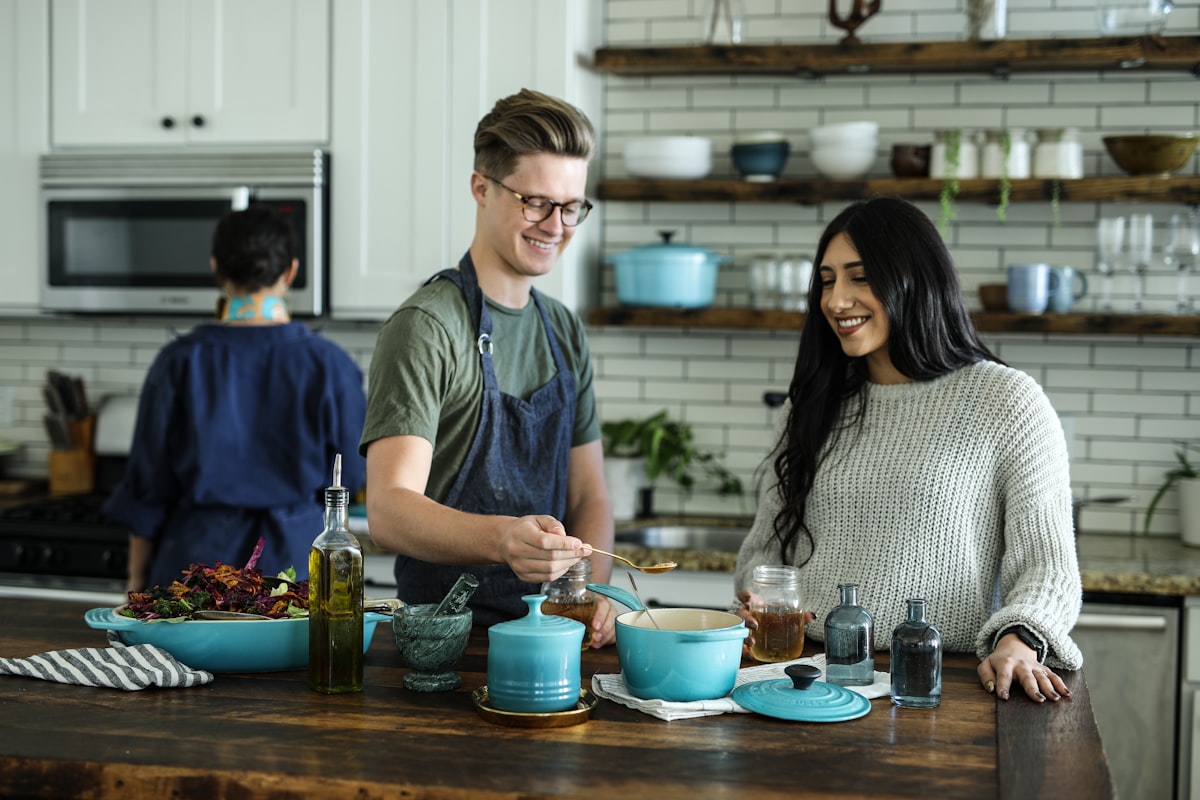
Prep a little before you turn on the heat
“Mise en place” means everything in its place. For weeknights, keep it tiny: chop the slowest vegetable first, measure spices into one bowl, open the can before the oil gets hot. Five minutes of prep still saves stress.
Keep your favorite spoon, tasting spoon, and zester in one drawer so you are not digging while onions cook. A bench scraper moves chopped food into the pan without drama.
If two people cook together, split zones: one person at the stove, one at the board, someone setting the table. Less bumping, less stress.
Cleanup that protects your weekend
Try a two-minute reset after dinner: scrape plates, rinse, wipe counters, start the dishwasher. Save heavy scrubbing for a slower day. Soaking a pan while you eat often loosens stuck food without steel wool.
Cleanup is part of cooking, not a punishment. Rinse the blender right after a smoothie. Line a sheet pan for roasting. Small habits save a lot of scrubbing later.
Plastic cutting boards can often go in the dishwasher if the label says so. Wood boards like hand washing and an occasional rub with food-safe oil. Let dish towels dry between uses so they stay fresh. A short chore list inside a cabinet can help housemates share the load without nagging.
Safety basics
Use different cloths or steps for raw meat than for salad. Replace sponges on a schedule, and follow your microwave manual if you ever sanitize a damp sponge—safety first. Put a non-slip mat under a cutting board when kids help at the counter.
Hot oil needs care: pat food dry before frying, lower it gently into the pan, and never throw water on a grease fire. Slide a metal lid over the pan if it is safe, and call for help if flames spread.
FAQs
Cooking quietly in a small apartment?
Use a silicone mat under the board, pick a heavier pan to reduce clatter, and lean on one-pan oven meals when you want fewer steps.
Clutter disagreements?
Agree on one basket for mail and one small bin for gadgets. Everything else goes back in a drawer at night.
Kids in the kitchen?
Start with tearing herbs, washing produce, or setting timers. Save knives for later, with supervision and the right tools.